What is a fair price per square foot for a Bal Harbour condo? If you have looked at a few listings, you have probably seen different square foot numbers for similar units and big swings in pricing from one tower to the next. That is normal in a small, luxury market where views, amenities, and building rules vary. In this guide, you will learn exactly how price per square foot works for Bal Harbour condos, what drives it, and how to use it to compare, negotiate, or set your asking price with confidence. Let’s dive in.
Data note: Prepared November 2025. For live figures, pull closed sales for the last 6 to 12 months before you act.
Why Bal Harbour commands a PPSF premium
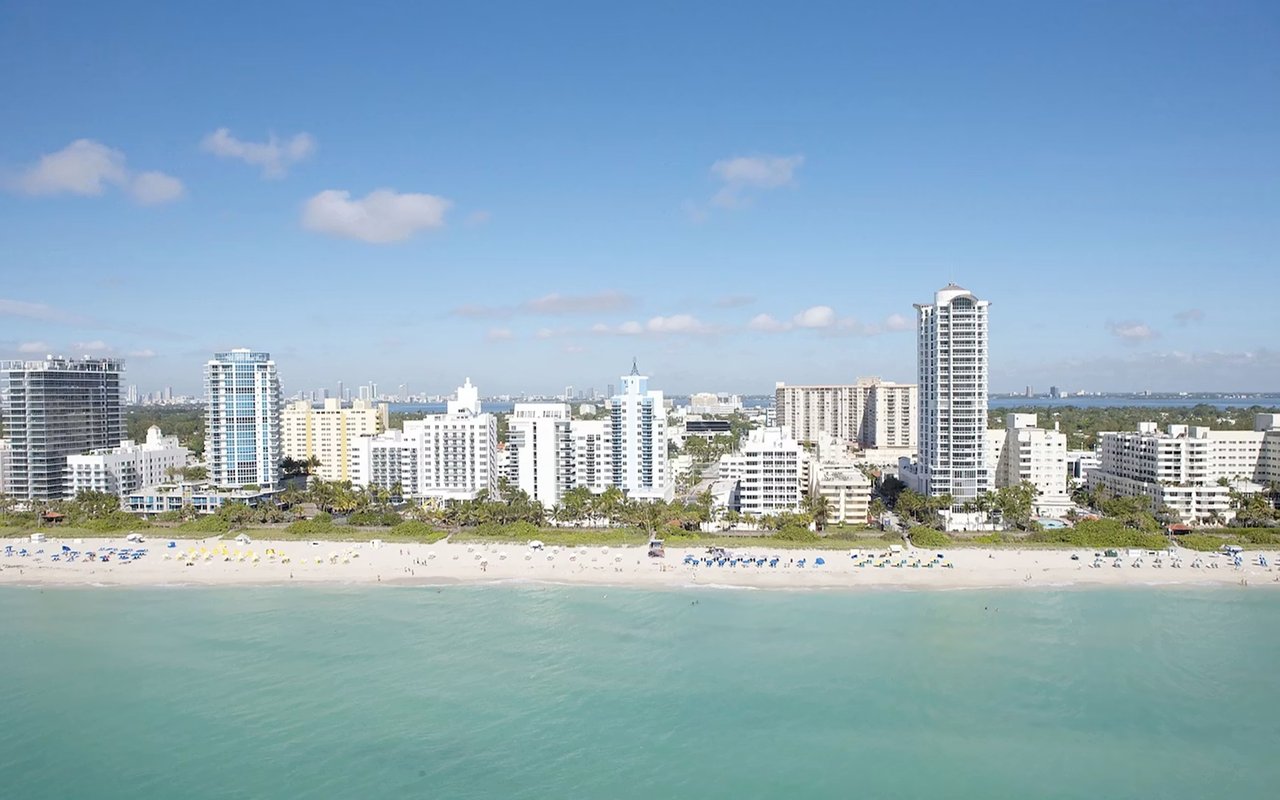
Bal Harbour is a small, built-out beachfront village at the north end of Miami Beach with a high concentration of luxury high-rise and mid-rise condominiums along Collins and Harding. Inventory is limited, and most buildings offer resort-style amenities designed for affluent domestic and international buyers. This mix supports higher price per square foot compared with many other Miami neighborhoods.
Location and lifestyle matter. Beachfront towers, proximity to Bal Harbour Shops, and prestige create consistent premiums. Seasonality also plays a role. Activity is year-round, but buyer traffic often increases in fall and winter. Bal Harbour’s buyer pool includes second-home purchasers, out-of-state buyers, and foreign buyers, which can influence negotiability and time on market.
What price per square foot really means
At its core, price per square foot (PPSF) is simple: Sale Price ÷ Square Footage. For condos, the square footage input can vary, which is why two similar listings can show different PPSF.
- Square footage sources you may see:
- MLS interior living area, often called livable area.
- County property appraiser’s recorded living area.
- Building or condo documents that specify interior area and terrace details.
- What is included can differ by building. Some buildings count enclosed balconies. Others do not. Terraces are often excluded from official interior square footage.
- Focus on closed-sale PPSF when valuing. List PPSF is a seller’s ask, not the market’s final say.
- In small, high-end markets, outliers can skew averages. A recent penthouse closing can move the needle for a quarter. Use median PPSF across a set of comparable closed sales for a steadier read.
- For apples-to-apples, many analysts compute an effective PPSF by adjusting the sale price for extras such as separately deeded parking or storage, or for a tenant in place. This helps you compare units on the true interior living area value.
How to compute PPSF for your unit
Use this step-by-step method to build a reliable comparison for Bal Harbour condos.
- Define your segments
- Decide what you are measuring: all Bal Harbour condos, only beachfront towers, non-beachfront buildings, or specific buildings and floor bands.
- Choose your area definition and state it. Example: interior living area from MLS and county records.
- Pull closed sales
- Gather closed sales for the last 6 to 12 months. If volume is low, expand to 12 months.
- Record unit, building, sale date, sale price, interior square footage, floor, view, and days on market.
- Clean the data
- Exclude atypical closings that distort PPSF, such as distressed sales, portfolio transfers, or family transactions, unless you plan to analyze them separately.
- Note any units with large terraces, separately deeded parking or storage, or tenant leases. Plan adjustments so comparisons are consistent.
- Segment your comps
- Group by building, view type (direct ocean, bay or intracoastal, city or side), floor tier (low, mid, high), and bedroom count or size range.
- Be careful with ultra-luxury penthouses. They can skew overall figures and should be shown as a separate segment.
- Compute PPSF metrics
- For each segment, calculate both median and mean PPSF using sale price divided by your chosen interior area.
- Note the sample size and timeframe. Example: “Median PPSF based on 12 closed sales over the last 12 months.”
- Adjust to effective PPSF
- If a sale includes a separately deeded parking space or storage with an identifiable market value, deduct that value from the sale price, then recompute PPSF. Keep your approach consistent across comps.
- Add context
- Flag building updates, special assessments, or major recent closings that may shift results. Bal Harbour’s small size means a few notable sales can move the range quickly.
- Set an update schedule
- Refresh your analysis every 3 to 6 months for public guidance. For pricing a specific listing or writing an offer, use real-time updates.
A quick example calculation
Consider two closed sales in the same building and floor tier, both using interior living area.
- Unit A: sold for 2,400,000, 1,600 interior square feet. PPSF = 2,400,000 ÷ 1,600 = 1,500.
- Unit B: sold for 2,315,000 net of adjustments. Interior area is also 1,600 square feet.
Suppose Unit B’s closing included a separately deeded parking space valued at 75,000 and a storage room valued at 10,000. You would subtract 85,000 from the recorded 2,400,000 to get an effective sale price of 2,315,000. Effective PPSF = 2,315,000 ÷ 1,600 = 1,447.
This shows how adjusting for included extras can change the comparison without implying a universal discount or premium. Use market-supported values for every adjustment you make.
What moves PPSF in Bal Harbour
Unit-level drivers
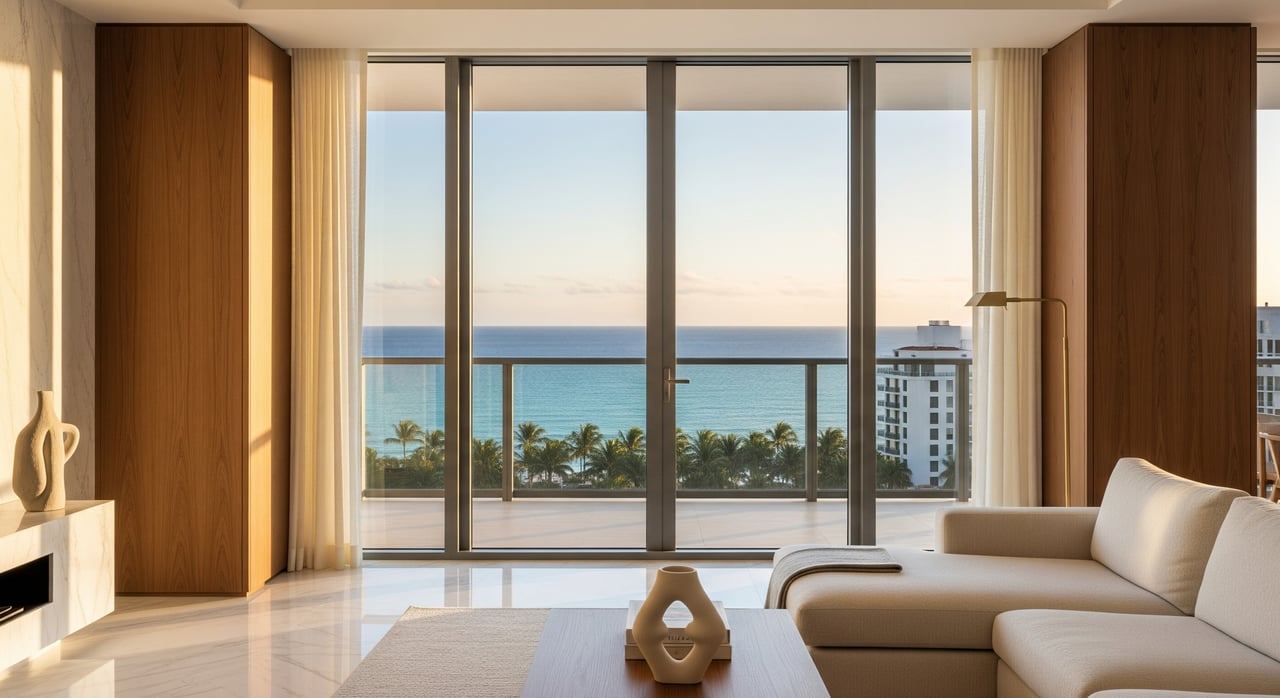
- View: Direct ocean frontage often carries the highest premium. Side or city views typically price lower on a per-foot basis.
- Floor level: Higher floors with unobstructed views trade at higher PPSF. Create floor bands to compare fairly.
- Condition and finishes: Fully renovated, luxury-finished units can command outsized premiums. Original-condition units tend to discount.
- Layout and terraces: Balconies and terraces add value, but they are usually not valued at the same per-foot rate as interior living area.
- Size: Smaller units can show higher PPSF than larger residences because of economies of scale.
Building and community factors
- Age and reputation: Newer or branded resort-style towers with modern construction and full services tend to show higher PPSF.
- Amenities and services: Doorman, valet, private beach services, spa, on-site dining, and 24-hour concierge support premiums.
- Parking and storage: Deeded parking and storage can be valued and adjusted for in comps.
Legal, financial, and insurance
- HOA dues: Higher monthly fees can reduce buyer willingness to pay, especially for investors balancing yield. Consider PPSF alongside monthly carrying costs.
- Rental rules: Flexible rental policies may support higher investor demand. Strict owner-occupancy rules can narrow the buyer pool.
- Insurance and hazard exposure: Coastal properties face flood and wind considerations. Use FEMA flood maps and building disclosures to understand coverage and potential cost.
Market and macro dynamics
- Interest rates and lending: Higher rates can shift demand toward smaller units or reduce PPSF overall.
- International demand and currency: Luxury Miami markets are sensitive to cross-border capital and exchange rates.
- Limited supply: Bal Harbour’s lack of developable land helps support prices over time.
How buyers should use PPSF
- Start with closed sales from the last 6 to 12 months in your target buildings and floor tiers.
- Confirm the square footage source for every comp and normalize. MLS, county, and building plans can differ.
- Look beyond PPSF. Incorporate HOA dues, insurance, taxes, and projected maintenance to understand total monthly cost.
- Ask for building documents early. Review condo rules, rental policies, and any special assessments or litigation.
- For investment goals, verify rental rules and seasonality. Model cash flow after HOA, taxes, insurance, and realistic vacancy.
- Request a building-specific market analysis from an agent experienced in Bal Harbour so you can align on view, floor, and renovation adjustments.
How sellers should use PPSF
- Price to your true segment. Anchor to closed-sale PPSF for your building, view, and floor tier.
- Calibrate expectations. If your unit lacks an ocean view or has older finishes, plan for a pricing strategy that reflects those differences.
- Improve your net PPSF with targeted updates that buyers value most, such as kitchens and baths, and professional staging.
- Present the home with high-quality photography and clear disclosure of renovations and permit history.
- Highlight deeded parking, storage, and any private beach access with clarity. These items carry real value in buyer comparisons.
- Consider a broker price opinion and, if needed, an appraisal to support your pricing when comps are thin.
Red flags that can distort PPSF
- Fewer than five recent comparable sales in your segment.
- Bulk portfolio sales, partial-interest transfers, or intra-family transactions.
- Buildings with pending special assessments, litigation, or financing issues.
- A surge of upcoming supply or conversions within your immediate comp set.
Update cadence and where to verify
For a blog snapshot, refresh your PPSF analysis every 3 to 6 months. For live pricing or offer decisions, use up-to-the-minute data.
Reliable sources include:
- Local MLS for current active, pending, and closed listings with detailed fields.
- Miami-Dade County Property Appraiser and public records for official sale prices and recorded living area.
- Building websites and condominium documents for floor plans, terrace policies, and rules.
- FEMA flood maps and building risk disclosures for insurance context.
- Regional market reports for trend summaries, keeping in mind that building-level analysis is essential in Bal Harbour.
Ready for a personalized Bal Harbour analysis?
If you want building-level PPSF ranges, adjustment guidance for your exact view and floor, and a clear plan to buy or list with confidence, schedule a private consult. You will get a tailored analysis, concierge support, and a streamlined process suited to local and international clients. Schedule a private consultation with Unknown Company.
FAQs
Do Bal Harbour condo balconies count toward square footage?
- Not consistently. Some buildings exclude terraces from interior living area, while others count enclosed spaces. Verify the condo plan, MLS field, and county record, then compare using the same measure across comps.
What is a good price per square foot in Bal Harbour?
- It depends on the segment. Direct ocean views, higher floors, and newer resort-style buildings trade at higher PPSF. Use closed sales from your building and floor tier to set a realistic range.
How often should I update PPSF figures for Bal Harbour?
- Refresh every 3 to 6 months for general guidance. For an offer or listing decision, pull the latest closed and pending comps and verify details in real time.
Do I need an appraisal for a Bal Harbour condo purchase or sale?
- If you are financing, your lender will require it. For pricing strategy or negotiations, a local broker’s market analysis can provide a strong baseline, with an appraisal used when needed.
How do insurance and flood zones affect Bal Harbour PPSF?
- Higher expected insurance costs or flood risk can reduce buyer demand and PPSF. Review FEMA flood maps, building disclosures, and typical coverage costs alongside your PPSF analysis.