Is pricing your Bay Harbor Islands waterfront condo keeping you up at night? You are not alone. Between marine access, HOA rules, insurance costs, and seasonal trends, it is easy to feel unsure about where to list. This guide gives you a clear, Bay Harbor Islands specific framework to set or evaluate a price with confidence. You will learn what drives value on the water, how to pull and adjust comps, and which due diligence items can move a price up or down. Let’s dive in.
Know the Bay Harbor Islands market
Bay Harbor Islands is a small, built-out municipality in Miami-Dade County next to Bal Harbour and North Miami Beach. Limited land and steady demand for coastal living shape pricing here. That naturally supports premiums for well-positioned waterfront condos.
Seasonality matters. You typically see more activity from fall through spring when out-of-state and international buyers are in town. Interest rates and countywide inventory also shift buyer urgency and days on market.
For current numbers, lean on local sources. The Miami-Dade County Property Appraiser helps confirm property characteristics and tax history. The MIAMI Association of REALTORS monthly reports show metro-level activity, median prices, and inventory. Your best comps and competition come from the MLS, which includes the latest closed, pending, and active listings.
Define your waterfront value
Not all “waterfront” is equal. Pricing depends on precise marine utility, view quality, building amenities, and financial health.
Marine access and boat slips
Direct, deepwater access without fixed bridges carries the strongest premium, especially for boat owners. Bayfront exposure with adequate channel depth outperforms canal settings with limited clearance.
Deeded boat slips add measurable value. Assigned, shared, or rented slips still help but at a lower premium. Dock and seawall condition, permitted work, and maintenance history directly affect value and can slow a sale if questions remain.
View and orientation
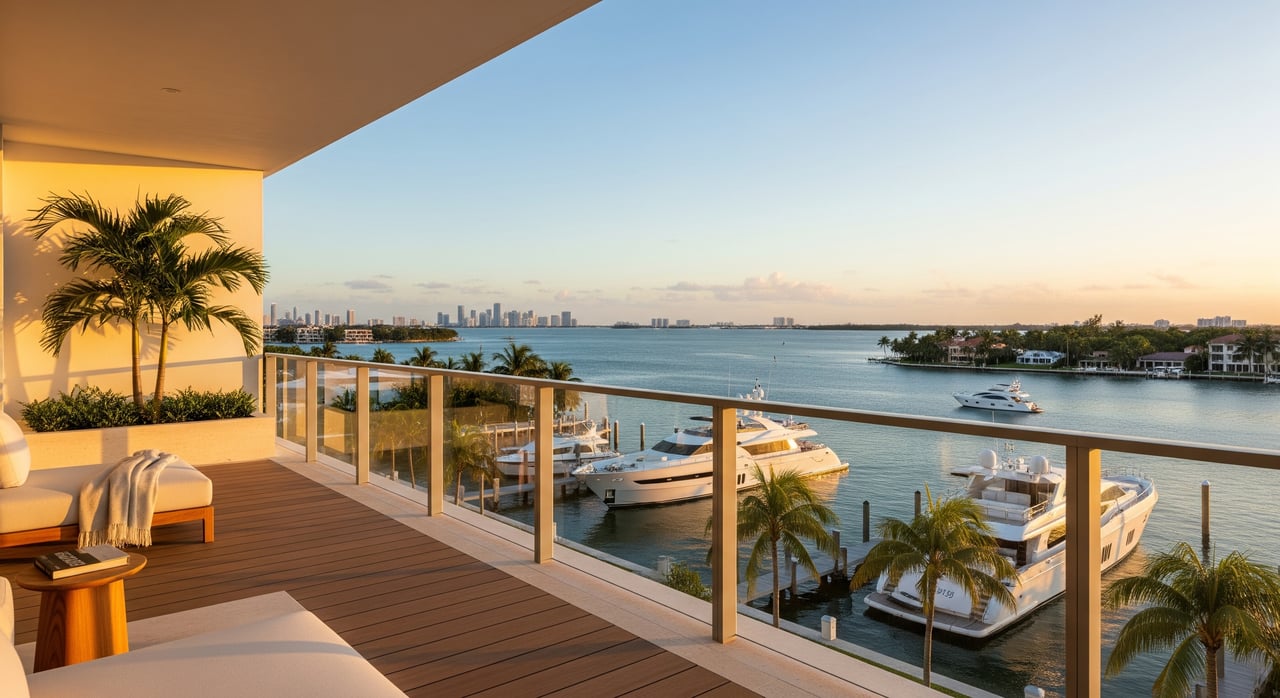
Unobstructed open-water views across Biscayne Bay usually price above partial water or canal views. Higher floors with broad water exposure and usable balconies perform well. Sun and wind exposure can matter for outdoor comfort and docking needs.
Building and unit features
Construction quality, hurricane retrofits, and association-managed marina operations matter. Buyers value secure parking, storage for marine gear, private elevators in luxury buildings, and impact windows and doors.
Inside the unit, updated kitchens and baths, a functional layout, and a private terrace that frames the water view all support stronger pricing.
HOA and financial health
Monthly HOA dues and what they include influence affordability. Master wind and flood coverage, reserves, and standard building maintenance included in dues may justify higher fees, but very high dues can compress buyer budgets.
Reserve levels, recent or planned special assessments, and any open litigation are material to price. Investor demand is also affected by rental policies and owner-occupancy ratios.
Insurance and hazard exposure
Flood zone designation and elevation affect insurance costs and lender requirements. Buildings with higher windstorm deductibles or limited carrier options can increase owner expenses. Recent storm repairs or seawall work should be documented to reduce perceived risk.
Lender and appraisal considerations
If a condo project is not approved with FHA, Fannie Mae, or Freddie Mac, it limits financing options for some buyers and can narrow demand. Appraisers will seek true waterfront comps and adjust heavily for differences in view, access, and slips. Be prepared to show the documentation that justifies a waterfront premium.
Location details
Proximity to Bal Harbour, retail and dining, and navigable boating channels can support value. Consider traffic patterns, boat traffic, and nearby marina operations when positioning your price.
Step-by-step pricing for sellers
Use this framework to build a precise, defensible list price for a Bay Harbor Islands waterfront condo.
Step 1: Define your “waterfront”
- Confirm deeded water rights and boat slip ownership or assignment.
- Note fixed bridges, bridge clearance, channel depth, and any restrictions.
- Document dock, bulkhead, and seawall condition with permits and repair history.
Step 2: Pull recent comps from the MLS
- Start with your building, then your block, then adjacent buildings with truly comparable marine access.
- Use the past 6 to 12 months of closed waterfront sales. Add current pending and active listings to understand competition.
- Expand to Bal Harbour and Surfside only when access and exposure are similar.
Step 3: Establish baseline metrics
- Calculate price per square foot for the closest matches.
- Track median, mean, and range. Remove outliers that do not match the quality or exposure of your unit.
- Note floor level, view type, and presence of a slip on each comp.
Step 4: Adjust for key differences
- Marine access: direct open water or deeded slip usually moves your price upward versus canal or no-slip scenarios.
- View and floor: panoramic open-water view and higher floors often price higher.
- Condition: modern finishes, impact openings, and updated systems support higher pricing.
- HOA and assessments: higher dues or pending assessments put downward pressure on price.
- Insurance and flood: higher owner costs reduce net affordability and may require a downward adjustment.
Step 5: Read supply, demand, and seasonality
- If months of inventory are low and demand is firm, you can test the high end of your adjusted range.
- If inventory rises or rates push affordability, pricing slightly below top comps can drive traffic and offers.
- Consider listing ahead of peak seasonal visits to maximize exposure.
Step 6: Choose your pricing strategy
- Market-clearing price: target the realistic top of your adjusted range to balance days on market and net.
- Test-the-market: price modestly above comps only with a strong marketing plan and readiness to adjust quickly.
- Psychological thresholds: place price points just below common MLS search cutoffs to widen buyer visibility.
Step 7: Prepare for appraisal and negotiations
- Create a comp packet that highlights marine access, slip documentation, permits, and recent building repairs.
- Include HOA financials, reserve summaries, and assessment disclosures.
- Be ready to explain adjustments for view, access, and condition with clear evidence.
What buyers evaluate to judge price
Buyers will weigh the waterfront premium by comparing your unit to recent true-waterfront sales in the same building or block. They will ask about slip rights, bridge clearance, and seawall condition. Many will compare HOA dues, reserves, and any pending assessments to nearby alternatives.
Insurance estimates, flood zone status, and elevation can be deciding factors for price-sensitive buyers. The easier it is to verify these items, the more confident a buyer feels paying at the top of your range.
Due diligence that can change value
Gather these items early. They can make or break offers and appraisals.
Association documentation
- Condo declaration, bylaws, and rules.
- Current budget, reserve study, and year-to-date financials.
- Board meeting minutes for the last 12 to 24 months.
- Insurance summary with wind and flood details and deductibles.
- Rental policies and owner-occupancy levels.
- Any pending assessments or planned capital projects.
Property condition and marine systems
- Full unit inspection focused on water intrusion, A/C, plumbing, and openings.
- Marine inspection of docks and seawalls, permit history, and recent repairs.
- Flood and elevation certificates, if available.
- Evidence of compliance with required retrofits.
Title, legal, and financing
- Verify deed status of any slip or dock and any easements.
- Confirm no pending litigation involving the association.
- Check FHA/VA/Fannie/Freddie approval status if buyer financing may depend on it.
Insurance and cost impact
- Obtain estimates for flood and wind coverage for owner budgeting.
- Clarify what the master policy covers versus owner HO-6 obligations.
Local regulatory checks
- Confirm local requirements for docks and seawalls with Miami-Dade permitting and Bay Harbor Islands municipal offices.
- Verify any short-term rental rules that could affect investor demand.
Smart strategies for current conditions
- Lead with transparency. Provide slip documents, elevation data, and HOA financials in your listing package.
- Use premium visuals to sell the view. Professional photography, video, and virtual tours help justify the top of your price range.
- Time your launch. Listing during higher-traffic months can expand your buyer pool.
- Price with room to negotiate, but anchor to comps. A small buffer can help you handle inspection credits without falling below market.
Pre-listing checklist for Bay Harbor condos
- Gather association financials, minutes, insurance summary, and reserve study.
- Verify and compile boat slip deeds and marine inspection reports.
- Stage and photograph the unit with an emphasis on the view and terrace.
- Complete minor repairs and document upgrades like impact windows or a newer A/C.
- Prepare a comp packet with 6 to 12 recent waterfront sales and your adjustment notes.
Common mistakes to avoid
- Calling a unit “waterfront” without clarifying access, clearance, and slip status.
- Ignoring special assessments, which buyers and lenders will uncover.
- Overlooking flood zone, elevation, or insurance costs until late in negotiations.
- Overpricing relative to true-waterfront comps with better views or slips.
- Waiting to market the water lifestyle. Lead with the boating story and proof of access.
Work with a local waterfront advisor
Pricing on the water is part art and part proof. The best results come from a precise comp set, clear documentation, and premium marketing that sells the view, access, and lifestyle. If you want a tailored strategy for Bay Harbor Islands and access to the latest MLS comps, schedule a private consultation with Carolina Bustillos. You will get boutique, marketing-first representation and hands-on guidance from valuation through closing.
FAQs
How do I calculate a fair list price for a Bay Harbor Islands waterfront condo?
- Start with 6 to 12 months of true-waterfront closed comps in your building or block, adjust for marine access, view, slip rights, condition, HOA dues, and insurance costs, then position within that range based on current inventory.
What adds the biggest premium on the water in Bay Harbor Islands?
- Direct, deepwater access without fixed bridges, a deeded slip, and an unobstructed bay view typically command the highest premiums, supported by updated finishes and strong building amenities.
How do HOA dues and assessments affect my price?
- Higher dues or pending assessments reduce buyer affordability and can lower the price buyers will pay compared with similar units that have lower ongoing costs and stronger reserves.
Will flood zone or elevation impact buyer demand and pricing?
- Yes. Flood zone and elevation influence insurance costs and lender requirements, which can shrink buyer pools and push price downward if owner expenses are materially higher.
What documentation should I prepare before listing my waterfront condo?
- HOA financials and minutes, insurance summaries, reserve study, slip deeds, marine inspection reports, flood and elevation certificates, and a comp packet tailored to the building and exposure.
Should I price above comps to test the market?
- Only if inventory is tight and you have a strong marketing plan with readiness to adjust quickly; otherwise you risk extended days on market and a lower eventual sale price.