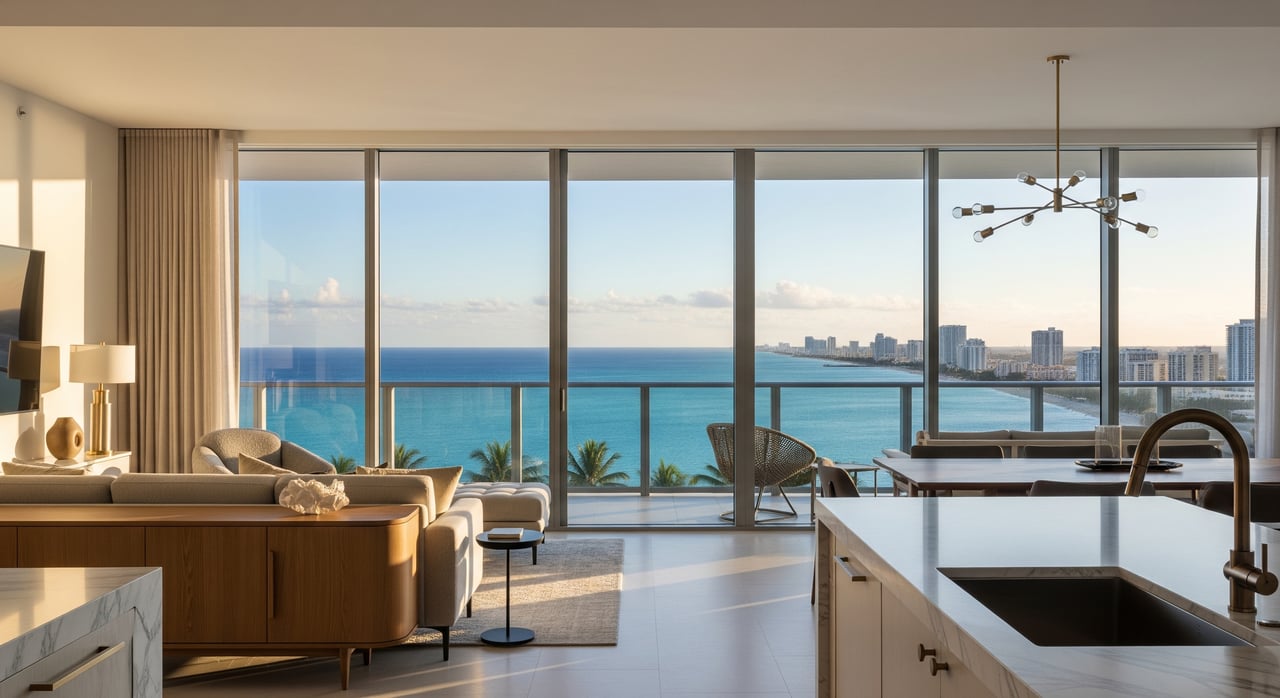
Thinking about a luxury condo in Bal Harbour and wondering how the financing works? In Miami’s coastal towers, the building itself can be as important as your credit and income. In a few minutes, you will understand how lenders review condo projects, what down payments and reserves are common, which insurance matters most on the beach, and what to do if a building is non-warrantable. Let’s dive in.
Why Bal Harbour financing differs
Bal Harbour sits in a high-end coastal pocket of Miami-Dade where many homes are priced well into the seven figures. At these levels, many loans exceed the conforming limit, so jumbo loans are common. For 2024, the baseline single-family conforming loan limit was 766,550 according to the FHFA conforming loan limits. When your loan amount exceeds the applicable limit, you move into jumbo underwriting.
Cash buyers are also common because cash can shorten timelines and remove financing risk. Agency financing through Fannie Mae and Freddie Mac can work well when a project is “warrantable.” FHA and VA loans require full project approval and are less common in luxury high-rises. You can review project standards in the Fannie Mae project eligibility and the Freddie Mac condominium project review resources. For FHA specifics, see FHA condominium approval resources.
How lenders review buildings
Before closing, your lender will order a Lender Condo Questionnaire (LCQ) and a project review. The HOA or building management completes this package. It helps the lender confirm if the project meets agency standards or if the loan must shift to jumbo or portfolio financing.
What the LCQ covers
The LCQ typically requests:
- Governing documents: declaration, bylaws, rules, and any amendments.
- Budget, most recent financials, and reserve study.
- Insurance declarations for the master policy, plus fidelity and D&O.
- Board meeting minutes and any pending or planned special assessments.
- Pending litigation, claims, or code actions.
- Owner-occupancy and investor ratios, delinquency rates, and any single-entity ownership concentrations.
- Commercial space percentage and rental policies.
- Construction defects, deferred maintenance, and repair plans.
Warrantability thresholds
While lenders vary, common guideposts include:
- Owner-occupancy around 50 percent or higher.
- Commercial space under roughly 25 percent of the project.
- No single owner with an outsized share, often cited around 10 percent.
- Adequate reserves funded and documented.
- HOA delinquency within limits, often near 15 percent or less.
- No disqualifying litigation, especially structural or financial.
Projects with heavy commercial use, high delinquencies, thin reserves, major litigation, or high short-term rental concentrations often become non-warrantable. That does not end your deal, but it can change your financing path.
Down payments and reserves
Typical down payments
Exact requirements depend on your profile and the lender, but you can expect the following ranges:
- Primary residence in a warrantable project: often 20 percent down.
- Second home: typically 20 to 25 percent down.
- Investment property: often 25 to 30 percent or more.
- Jumbo loans: commonly 20 to 30 percent down, sometimes higher on larger balances.
- Non-warrantable condos: portfolio lenders often require 30 to 50 percent down.
If you use conventional financing above 80 percent loan-to-value on a primary, PMI may apply. Many jumbo programs structure higher down payments to avoid PMI.
Borrower and HOA reserves
- Borrower reserves: expect 2 to 12 months of reserves for conforming loans, and often 6 to 12 months or more for jumbo and investment loans. Reserves usually include your full housing payment and HOA dues.
- HOA reserves: lenders want to see healthy reserves and a credible plan to fund major components. Many agencies look for a meaningful percentage of the annual budget set aside for reserves or documentation via a reserve study.
Insurance for coastal condos
Master policy and windstorm
The association’s master policy typically covers common areas and the building envelope. In Florida, policies often include windstorm and hurricane coverage with a percentage deductible, sometimes 1 to 5 percent of the policy limit. Large deductibles can lead to special assessments after a storm, so review the declarations carefully. Lenders also look for fidelity and D&O coverage as risk management basics.
HO-6 and flood coverage
You will likely need an HO-6 policy to cover interior finishes, personal items, and loss assessment. In coastal buildings, loss assessment coverage is important because an HOA can levy assessments when deductibles or uninsured losses apply. Many buyers select loss assessment limits in the 10,000 to 50,000 range, depending on the building and lender expectations.
If the building sits in a Special Flood Hazard Area, flood insurance is required for loans. Check the zone at the FEMA Flood Map Service Center and get quotes early. Florida’s insurance market is unique and premiums can affect your monthly budget. For consumer guidance, visit the Florida Office of Insurance Regulation.
Non-warrantable options
If the project does not meet agency standards, you still have financing paths:
- Portfolio loans: The lender holds the loan on its books and sets its own rules. These loans are flexible but often carry higher rates, larger down payments, and stronger liquidity requirements.
- Cash: Removes project approval, appraisal risk for financing, and underwriting delays. Many buyers still order a private appraisal for peace of mind.
- Seller financing: Possible when a seller is willing to carry a note. Terms vary and depend on the building’s documents.
- Bridge or private loans: Short-term financing that can help you close while you plan to refinance later. Costs and risks are higher, so review terms carefully.
Buyer checklist and timeline
Documents to gather
From you:
- Signed contract and any addenda.
- Upfront preapproval or proof of funds for cash.
- Income and asset documentation, including proof of reserves.
- Gift letters if applicable.
From the HOA or manager:
- Completed LCQ or project certification.
- Current budget, financials, and bank statements.
- Reserve study and current reserve balance.
- Insurance declarations for master, liability, fidelity, and D&O.
- Governing documents and amendments.
- Board meeting minutes for the last 12 to 24 months.
- Special assessment details and related bids or repair plans.
- Litigation statement and owner-delinquency report.
- Owner-occupancy and single-entity ownership roster.
- For new or converted buildings, certificate of occupancy and status.
Additional checks:
- If you plan FHA or VA, confirm project approval first.
- Review local inspection history and any required repairs via Miami-Dade building recertification.
- Confirm flood zone status and get flood plus HO-6 quotes early.
Timeline and pain points
- Pre-offer: meet lenders who specialize in South Florida condos. Discuss jumbo, portfolio, and second-home or investment structures.
- After contract: order appraisal and title, and request the LCQ and HOA pack immediately. Management response times are a common bottleneck.
- If the LCQ reveals issues: your lender may pivot to a portfolio product or issue a conditional denial. Be ready to adjust terms, bring a larger down payment, or explore cash.
- Appraisals: high-end condos can have limited comps. Keep a valuation buffer in your plan.
- Insurance: get HO-6 and flood quotes early so there are no surprises.
Offer-strength tips
- Work with a lender experienced in Miami-Dade condominiums.
- Start the HOA documentation the day you go under contract.
- Consider a larger down payment to expand loan options.
- Keep a cash or portfolio backup plan for non-warrantable findings.
Local guidance and next steps
Bal Harbour financing is about more than rate and payment. It is about choosing the right lender for your project, confirming reserves and insurance early, and managing the HOA documentation timeline. If you value a smooth, private process suited to international and local buyers, partner with a boutique advisor who coordinates the moving pieces with discretion.
If you are ready to refine your plan for a Bal Harbour purchase, connect with Carolina Bustillos for concierge guidance tailored to Miami’s coastal condos. Schedule a private consultation.
FAQs
What is the conforming limit and why it matters in Bal Harbour?
- The baseline 2024 conforming loan limit was 766,550 per the FHFA conforming loan limits. Many Bal Harbour prices exceed this, so you may need jumbo financing.
What issues most often derail condo loans in Miami-Dade?
- Project-level problems like significant litigation, thin or inadequate reserves, high HOA delinquencies, excessive commercial space, or low owner-occupancy often cause denials.
What insurance will I need for a Bal Harbour condo purchase?
- Expect an HO-6 policy with loss assessment coverage, and flood insurance if in a Special Flood Hazard Area, which you can check at the FEMA Flood Map Service Center. For market context, see the Florida Office of Insurance Regulation.
What are my options if the building is non-warrantable?
- You can move to a portfolio loan, buy with cash, explore seller financing, or use short-term bridge financing and plan to refinance later.
How can I speed up closing on a luxury condo in Bal Harbour?
- Get preapproved with a condo-experienced lender, request the LCQ and HOA documents immediately after contract, order insurance quotes early, and keep a backup financing plan ready.